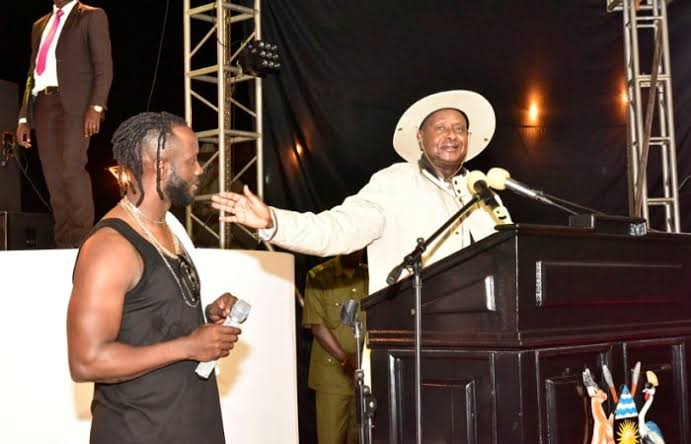
Popular Ugandan musician Bebe Cool has revealed that he once turned down a ministerial appointment reportedly offered to him by President Yoweri Museveni, saying he has no desire to serve directly in government.
The celebrated singer made the revelation during a recent radio interview, where he opened up about his relationship with government and his personal views on politics.
According to Bebe Cool, the offer was presented to him several years ago, but after careful consideration, he decided that active political participation was not the path he wanted to pursue.
The musician explained that while he supports certain government programs and policies, he prefers to remain outside formal political office.
He said his decision was based on personal conviction and a belief that he could contribute more effectively while maintaining his independence.
Bebe Cool disclosed that the ministerial position was not the only high-profile appointment he had declined over the years.

He further revealed that he had also been approached regarding ambassadorial roles but similarly chose not to accept them.
According to the singer, his conversations with President Museveni were respectful and candid, allowing him to express his position openly.
He maintained that he has never felt pressured to take up political office despite the opportunities that were reportedly presented to him.
The Gagamel boss emphasized that he has always preferred working alongside government institutions rather than becoming part of the government structure itself.
He argued that collaboration from outside government can sometimes provide greater flexibility and opportunities than serving within official state institutions.
Bebe Cool suggested that individuals and businesses can contribute to national development through partnerships and projects without necessarily occupying political positions.
His remarks have sparked considerable discussion among fans and political observers, many of whom were surprised by the revelation.
Some supporters praised him for remaining focused on his music career while maintaining the freedom to express his views independently.
Others argued that his experience and influence could potentially have been valuable in public service had he chosen to accept the appointments.
Political analysts note that Bebe Cool has long been regarded as one of the entertainers most closely associated with Uganda’s ruling establishment.
Over the years, he has publicly supported government initiatives and frequently engaged in national conversations on governance and development.

Despite this association, the singer’s latest comments suggest that he sees a clear distinction between supporting government programs and holding public office.
His remarks also highlight the increasingly important role that influential public figures play in shaping political and social discussions outside traditional government structures.
The revelation has generated debate about whether successful entertainers should transition into politics or continue contributing through their respective professions.
Many observers point to examples across Africa where musicians, actors, and sports personalities have entered politics with varying degrees of success.
For Bebe Cool, however, the decision appears to have been straightforward, with the artist insisting that his preference remains working with government rather than serving directly within it.
As reactions continue to emerge, the singer’s comments have added a new dimension to discussions about celebrity influence, political engagement, and the different ways public figures can contribute to national development without occupying government office.
About the Author