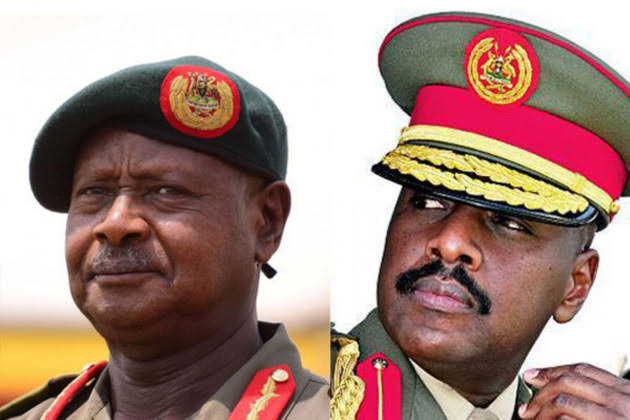
Gen. Muhoozi Kainerugaba has provided a fresh update on Uganda’s long-awaited Standard Gauge Railway (SGR) project, revealing that a final decision has not yet been reached.
In remarks shared on social media, Muhoozi indicated that discussions surrounding the multi-billion-dollar infrastructure project are still ongoing and that important consultations remain ahead.
According to the Chief of Defence Forces, he expects to meet President Yoweri Museveni soon before communicating further details to the country.
His comments have immediately attracted widespread attention because the SGR remains one of the most anticipated infrastructure projects in Uganda’s history.
The railway project has been viewed by many policymakers as a potential game changer for trade, transportation, and regional economic integration.
Muhoozi’s remarks suggest that high-level discussions continue to take place regarding the future direction of the project and the partnerships required to make it a reality.

He further disclosed that senior leaders from China have communicated with him regarding the matter.
According to his statement, Chinese officials remain highly interested in seeing the project move forward and are actively encouraging progress.
The revelation highlights the significant international attention that Uganda’s railway ambitions continue to attract.
China has for many years been one of Uganda’s most important development partners, supporting major infrastructure projects across multiple sectors.
The SGR has long been considered a critical component of efforts to modernize transport networks and reduce the cost of moving goods across the region.
Supporters of the project argue that an efficient railway system could significantly improve Uganda’s competitiveness and attract new investment opportunities.
Business leaders have repeatedly emphasized the importance of modern transport infrastructure in supporting industrialization and economic growth.
The railway is also expected to strengthen trade connections between Uganda and neighboring countries by facilitating faster cargo movement.
However, questions surrounding financing, implementation timelines, and regional coordination have contributed to delays over the years.
Economic analysts note that projects of this scale require extensive planning and careful consideration because of their long-term financial implications.
Some experts argue that any final decision must balance infrastructure needs with concerns about debt sustainability and project viability.
Others believe that delaying strategic infrastructure investments could slow economic transformation and reduce future growth opportunities.
Muhoozi’s comments have therefore reignited public discussion about the urgency of completing major national development projects.

Supporters of the government’s infrastructure agenda welcomed the update, saying it demonstrates that discussions are continuing at the highest levels.
Meanwhile, critics argue that Ugandans have waited many years for concrete progress and would like greater clarity regarding timelines and implementation plans.
Political observers say the latest remarks reflect the strategic importance that the railway project continues to hold within government circles.
The involvement of Chinese leaders, as referenced by Muhoozi, also underscores the international dimensions of Uganda’s infrastructure ambitions.
Many citizens remain hopeful that a final decision will soon be reached, allowing construction plans to advance after years of anticipation.
As the country awaits further communication following Muhoozi’s expected meeting with President Museveni, the future of the Standard Gauge Railway remains one of Uganda’s most closely watched development issues.
About the Author